
Get sponsored to become a specialized nurse
Fraser Health offers Specialty Nursing Education Sponsorship to selected applicants as part of our ongoing shared responsibility for professional development and safe, competent ethical care.
We'll pay 100% of your tuition and wages.
Upon successful completion of the program, employees are offered a regular position within the specialty they have chosen.
- Please note an 18-month Return-of-Service commitment may be required upon successful completion of a program.
Grow your nursing career with Specialty Nursing Education
Get started by selecting from a specialty below.
These pathways offer a recommended approach to your specialty nursing career journey with Fraser Health. You decide where to begin, and you can enter or exit the pathway whenever needed. Each person’s journey into specialty nursing will be unique.
The Fraser Health cardiac network operates across tertiary sites, community hospitals, and outpatient clinics providing staff with diverse opportunities to grow cardiac nursing skills. Cardiac nursing is a dynamic and multifaceted specialty that spans a continuum of care, from acute interventions to chronic disease management.
As a cardiac nurse, you will develop expertise in cardiovascular pathophysiology, pharmacology and complex continuous telemetry monitoring. Cardiac nurses work collaboratively with interdisciplinary teams to optimize outcomes for patients with heart disease.
ardiac Nursing practice in Fraser Health includes several distinct levels:
- Level 1 – Cardiac Surgery Intensive Care Unit (CSICU)
- Level 2 – Cardiac High Acuity
- Level 3 – Medicine/Telemetry
Intensive Care Unit nursing is a dynamic and rewarding specialty where you will care for the most critically ill patients using advanced technology, life-saving interventions and highly specialized skills. As an ICU nurse, you will become an expert in ventilators, vasoactive medications, continuous monitoring, and rapid decision-making, playing a pivotal role in stabilizing patients and supporting patients and families during their most vulnerable moments.
Fraser Health is home to eight (8) Intensive Care Units, offering diverse learning and practice environments.Explore your future in Critical Care, ICU ›
Post Anesthetic Care Unit (PACU) nursing is a fast-paced, critical care specialty where you will care for people recovering from the immediate post-operative phase of their surgical journey. As a PACU nurse, you will become an expert in airway management, pain, nausea control, hemodynamic stability and post-operative assessments.
You will play a vital role in monitoring for complications, providing reassurance to patients waking from anesthesia and collaborating closely with anesthesia and surgical teams. This work is critical in reducing post-surgical complications, improving recovery outcomes and ensuring patient comfort and safety during one of the most vulnerable points in the surgical journey. You will care for a diverse, multi-generational surgical population that reflects the scope of surgical services across the health authority.
PACU nurses in Fraser Health work in environments that prioritize safety, evidence-based practice and excellent patient outcomes. Fraser Health’s PACUs support a broad range of surgical services. High acuity surgeries such as neurosurgery, vascular, cardiac, trauma and thoracic occur at the larger tertiary sites. Community sites offer opportunities to practice within a close knit multi-disciplinary team as well as a broad range of services.
Fraser Health offers two streams into sponsored education programs for registered nurses (RNs) wishing to pursue a career in the PACU: the Fraser Health critical care program (CCP) or the British Columbia Institute of Technology (BCIT) critical care program .
Either of these critical care education programs are then followed with registration into Fraser Health in-house post-anesthetic care unit education program (PEP). The CCP and BCIT critical care curriculums prepare nurses with entry-level competencies suitable for novice critical care nursing practice. The PEP curriculum provides a beginning introduction to PACU nursing practice.
Fraser Health Return of Service Agreement Required: NO, although a return of service agreement is required if the learner is also sponsored for the critical care education program (CCP or BCIT).
Sponsorship into Fraser Health’s post-anaesthetic care unit education program (PEP) is offered at the following sites:
- Abbotsford Regional Hospital and Cancer Center
- Burnaby Hospital
- Chilliwack General Hospital
- Delta Hospital
- Eagle Ridge Hospital
- Jim Pattison Outpatient Care and Surgery Center
- Langley Memorial Hospital
- Peace Arch Hospital
- Ridge Meadows Hospital
- Royal Columbian Hospital
- Surrey Memorial Hospital
Fraser Health in-house Program: Critical Care Program (CCP)
Fraser Health offers sponsorship to the in-house Critical Care Program (CCP). The curriculum focuses on early socialization to the critical care setting, where learners will have the opportunity to focus on theory, high fidelity simulation, and clinical experiences each week. CCP offers the flexibility for asynchronous learning, with required synchronous sessions for expert guest speakers and regional CNE lectures, in addition to in-person participation for simulation and clinical.
Clinical consolidation will occur at a regional tertiary level critical care environment (Abbotsford Regional Hospital (ARH), Royal Columbian Hospital (RCH) or Surrey Memorial Hospital (SMH)), depending on the learner sponsoring site.
Sponsorship includes:
Prerequisites
Offered over five and one half (5.5) weeks, online & in-person.
- Mosby’s ECG Interpretation 4.0
- Includes independent study of online modules (28 hours)
- Exam prep session (Two (2) hours; optional)
- Final exam (Two (2) hours; in-person with required minimum score of 80% to pass)
- Classroom education day (Seven and one half (7.5) hours; optional but highly recommended)
- Simulation day (Seven and one half (7.5) hours; optional but highly recommended)
Full-time studies
Offered as a compressed time frame (CTF) over 13.5 weeks.
Elements of blended learning:
- Modularized accredited theory: Essentials of Critical Care Orientation (ECCO)
- High fidelity simulation
- Expert guest speakers
- Regional CNE lectures
- Unique transition to home site
- Clinical experience at a tertiary hospital (ARH, RCH, or SMH) via instructor-led model
- Competency based evaluation
Graduates will receive a certificate of completion from Fraser Health and ECCO.
**A modified CCP full-time curriculum is available to those who have previous high acuity or emergency education. Individual learner assessment by the CCP lead is required to confirm registration
BCIT program: Critical Care
Fraser Health offers sponsorship to the BCIT Critical Care Nursing Specialty program. Clinical components occur at a regional tertiary level critical care environment at Abbotsford Regional Hospital, Royal Columbian Hospital or Surrey Memorial Hospital following an instructor-led model.
Pre-requisite
- 24-weeks online:
- NSCC 7120 – Critical Care Theory 1
- NSCC 7150 – Dysrhythmia Interpretation and Management
- NSCC 7220 – Critical Care Theory 2
Program details
- 13-weeks full-time studies:
- NSCC 7320 – Critical Care Theory 3
- NSCC 7420 – Clinical 1
- NSCC 7520 – Critical Care Theory 4
- NSCC 7620 – Clinical 2
Upon successful completion of the program, graduates will receive a critical care certificate from BCIT.
***A bridge-in option is available to those who have previous high acuity or emergency education. Individual learner assessment by BCIT is required to confirm registration.
Fraser Health in-house: PACU Education Program (PEP)
Fraser Health offers sponsorship into the PACU Education Program (PEP). To be eligible for PEP, sponsored-PACU participants must have successfully completed a critical care program or equivalent. The PEP curriculum focuses on early socialization to the PACU setting, where learners will have the opportunity to focus on theory, high fidelity simulation, and clinical experiences. PEP offers the flexibility for asynchronous learning, with required synchronous sessions for regional CNE lectures, in addition to in-person participation for simulation and clinical. Clinical consolidation will occur at the sponsoring PACU site.
Prerequisites for Fraser Health in-house PEP: successful completion of Fraser Health in-house CCP, BCIT critical care program or equivalent.
Sponsorship includes:
Full-time studies
Offered as a compressed time-frame (CTF) over three (3) weeks.
Elements of blended learning:
- Modularized theory: Mosby’s Orientation to Perianesthesia Nursing (MOPAN)
- High fidelity simulation
- Regional CNE lectures
- Clinical experience at the sponsoring site via preceptor-led model
Graduates will receive a certificate of completion from Fraser Health.
Emergency nursing in Fraser Health is fast-paced, dynamic and deeply rewarding.
Nurses provide initial care to patients of all ages, managing a wide range of acute and complex conditions. They work closely with interdisciplinary teams and are skilled in rapid assessment, trauma care, and supporting patients through urgent health challenges.
Emergency departments across Fraser Health vary from smaller community sites to large urban trauma centers, offering nurses diverse experiences and environments to practice in.
This specialty offers strong opportunities for growth, with clear pathways for career advancement and a variety of roles available across the region.
Explore your future in Emergency & Pediatric Emergency ›
Surrey Memorial Hospital (SMH) serves as the thoracic and head and neck Surgery center for Fraser Health, providing specialized care for complex cancer surgeries involving the chest, lungs, esophagus, trachea and oral cavity. The surgical high acuity unit on 3-South Surgical at SMH care for this complex pre-and-post-operative patient population.
These patients require close monitoring during the first 72–96 hours post-op which may include continuous oximetry, bedside/remote telemetry and a dedicated thoracic special care unit for step-down care.
Additionally, the unit supports general surgery, reconstructive plastic surgery, urology, and gynecology, with a separate unit for orthopedic surgery.
3-South surgical high acuity nurses are trained in:
- Chest tube care
- ECG/cardiac monitoring
- Arterial lines
- Tracheostomy and laryngectomy care
- Surgical reconstructive flap monitoring
- Epidural, PCA, and advanced pain management
- Enteral feeding and TPN
- Ostomy care
- Complex wound management
The unit is a highly collaborative team consisting of registered nurses, surgeons, nurse practitioners, associate physicians, dietitians, physiotherapists, and speech language pathologists—delivering expert post-op care and helping patients achieve optimal outcomes.
Fraser Health offers one stream of sponsored education for registered nurses (RNs) wishing to pursue a career on the surgical high acuity unit: the British Columbia Institute of Technology (BCIT) High Acuity specialty program. Graduates of this program have the novice competencies to practice on the respective surgical setting at Surrey Memorial Hospital.
Fraser Health Return of Service Agreement required: Yes
Sponsorship into the BCIT High Acuity program is offered at the following site:
- Surrey Memorial Hospital, 3-South Surgical
BCIT
Fraser Health offers sponsorship to BCIT’s high acuity program.
Sponsorship includes
Prerequisite
Offered online over 12 weeks.
- NSHA 7100 – High Acuity Specialty Nursing Theory 1
Full-time studies
Offered as a compressed time frame (CTF) over seven (7) weeks.
- NSHA 7150 – Dysrhythmia Interpretation & Management
- NSHA 7201 – High Acuity Specialty Nursing Theory 2
- NSHA 7300 – High Acuity Specialty Nursing Clinical 1
Graduates will receive BCIT’s high acuity certificate.
View BCIT course details.
Interventional Radiology (IR) nursing is a specialized field within nursing that focuses on patient care before, during and after minimally invasive, image-guided procedures. These procedures are performed to diagnose and treat a wide range of conditions across nearly every organ system, often as alternatives to traditional surgery. Many patients are scheduled for same day procedures, but a significant number are inpatients, some of whom are extremely ill at the time of their procedure.
The IR registered nurse (RN) will assess, plan and implement the total care of the conscious or conscious-sedated patient, including monitoring vital signs and electrocardiogram rhythms. The ability and nursing knowledge to understand trending vital signs and patient conditions are crucial to the safe delivery of patient care in the interventional radiology suite.
Experienced, trained RNs are integral to the interventional radiology team, providing critical care for patients with rapidly evolving clinical conditions, alike roles in other procedural settings. At least one-third of patients requiring vascular and non-vascular intervention present as emergency cases, therefore there is a need for interventional radiology nurses to be available on a 24-hour basis (on-call).
Core responsibilities of IR nursing include (but are not limited to):
- Pre-procedure care: patient screening, education, verifying NPO status, inserting IV lines and preparing for sedation.
- Intra-procedure support: monitoring vital signs, administering medications, assisting with contrast media injections and ensuring patient safety during procedures.
- Post-procedure care: observing for complications, managing recovery, educating patients on discharge instructions and conducting follow-ups.
Examples of qualities that IR nurses must possess:
- Technologically adept, working with CT, MRI, ultrasound and fluoroscopy environments.
- Detail-oriented and organized in fast-paced environments.
- Skilled in critical thinking and emergency response.
- Capable of performing assessments, administering sedation and assisting in complex procedures like angioplasty, biopsies and catheter placements.
Fraser Health offers one stream of sponsored education for RNs wishing to pursue a career in interventional radiology: The Fraser Health in-house cardiac high acuity education pathway. The cardiac high acuity program consists of the following three programs:
- Accredited ECG course (Mosby’s ECG, BCIT NSCC 7150, or equivalent)
- Core Learning in Critical Care (CLCC)
- Advanced Cardiac Education (ACE).
This pathway prepares nurses with entry-level competencies suitable for novice cardiac high acuity nursing practice.
Fraser Health Return of Service Agreement required: YES
Sponsorship into the Fraser Health in-house cardiac high acuity program for Interventional Radiology is offered at the following sites:
- Royal Columbian Hospital
- Surrey Memorial Hospital
Fraser Health in-house program: Mosby’s ECG Education
Accredited ECG education such as the Mosby’s ECG course is the first step of the Fraser Health in-house cardiac high acuity education pathway. A regional CNE will lead the program and be the point of contact for learner support. The Mosby’s ECG curriculum prepares nurses with entry-level competencies suitable for novice telemetry nursing practice. Learners will continue to work on their unit while participating in Mosby’s ECG 4.0.
Sponsorship includes:
Offered over five and a half (5.5) weeks, online and in-person.
- Modularized theory (28 hours)
- 17-accredited content modules and a practice final exam
- Exam prep session (Two (2) hours)
- Optional attendance
- Synchronous session facilitated by a regional CNE
- Final exam (Two (2) hours)
- In-person exam with a required minimum passing score of 80%
- Two (2) attempts offered
- Classroom Education Day (Seven and one half (7.5) hours)
- In-person session
- Simulation day (Seven and one half (7.5) hours)
- In-person session
Graduates will receive a certificate of completion from Fraser Health.
BCIT
Accredited ECG education such as the BCIT NSCC 7150 is the first step of the Fraser Health in-house cardiac high acuity education pathway. A self-sponsor option is available for the BCIT NSCC 7150 Dysrhythmia Interpretation and Management course. The BCIT NSCC 7150 curriculum prepares nurses with entry-level competencies suitable for novice telemetry nursing practice. Learners will continue to work on their unit while participating in Mosby’s ECG 4.0.
Learn more about this BCIT course.
Fraser Health in-house program: Core Learning in Critical Care (CLCC)
The Core Learning in Critical Care (CLCC) program is the second step of the Fraser Health in-house cardiac high acuity education pathway.
Fraser Health offers sponsorship into CLCC for registered nurses (RNs) who have been hired and sponsored by a Interventional Radiology area. CLCC offers the flexibility for asynchronous learning, with required synchronous sessions for guest speakers and regional CNE lectures/discussions, in addition to in-person participation for simulation. The CLCC curriculum provides nurses with an introduction to high acuity nursing practice.
Upon completion of CLCC, RNs sponsored for interventional radiology will not have an increase in practice competencies and will continue to practice in an interventional radiology transition line.
Prerequisites for CLCC: Mosby’s ECG, or British Columbia Institute of Technology (BCIT) NSCC 7150 Dysrhythmia Interpretation & Management, or equivalent.
Sponsorship includes:
Full-time studies
Offered as a compressed time-frame (CTF) over three (3) weeks.
- Modularized theory (34 hours): Essentials of Critical Care Orientation (ECCO) and LearningHub
- Regional CNE lectures
- Case studies
- Guest speakers
- Self-reflection journalling
- Skills sessions
- High-fidelity simulation
Graduates sponsored by interventional radiology will have the CLCC program hours included in the Advanced Cardiac Education (ACE) certificate of completion.
Fraser health in-house program: Advanced Cardiac Education (ACE)
The Advanced Cardiac Education (ACE) program is the final step of the cardiac high acuity education pathway.
Fraser Health offers sponsorship into Advanced Cardiac Education (ACE) for RNs who have been hired and sponsored by a interventional radiology area. The ACE curriculum prepares nurses with entry-level competencies suitable for novice cardiac high-acuity nursing practice. ACE offers the flexibility for asynchronous learning, with required synchronous sessions for guest speakers and regional CNE lectures/discussions, in addition to in-person participation for simulation and clinical. Clinical consolidation will occur primarily at a regional tertiary level ICU (ARH, RCH, or SMH), depending on the learner sponsoring site
Prerequisite for Advanced Cardiac Education (ACE):
- Consolidation of accredited ECG competencies (BCIT NSCC 7150, Mosby’s ECG, or equivalent) for minimum 3-months.
- Consolidation of CLCC competencies for a minimum 1 – 3 months.
Sponsorship includes:
Full-time studies
Offered as a compressed time-frame (CTF) over three (6) weeks.
- Modularized theory (16.5 hours): Essentials of Critical Care Orientation (ECCO)
- Regional CNE lectures/discussions
- Case studies (Independent & Group)
- Skills & High-Fidelity Simulation (22 hours):
- Clinical experience via instructor-led model (131.5 hours):
Graduates will receive a certificate of completion from Fraser Health.
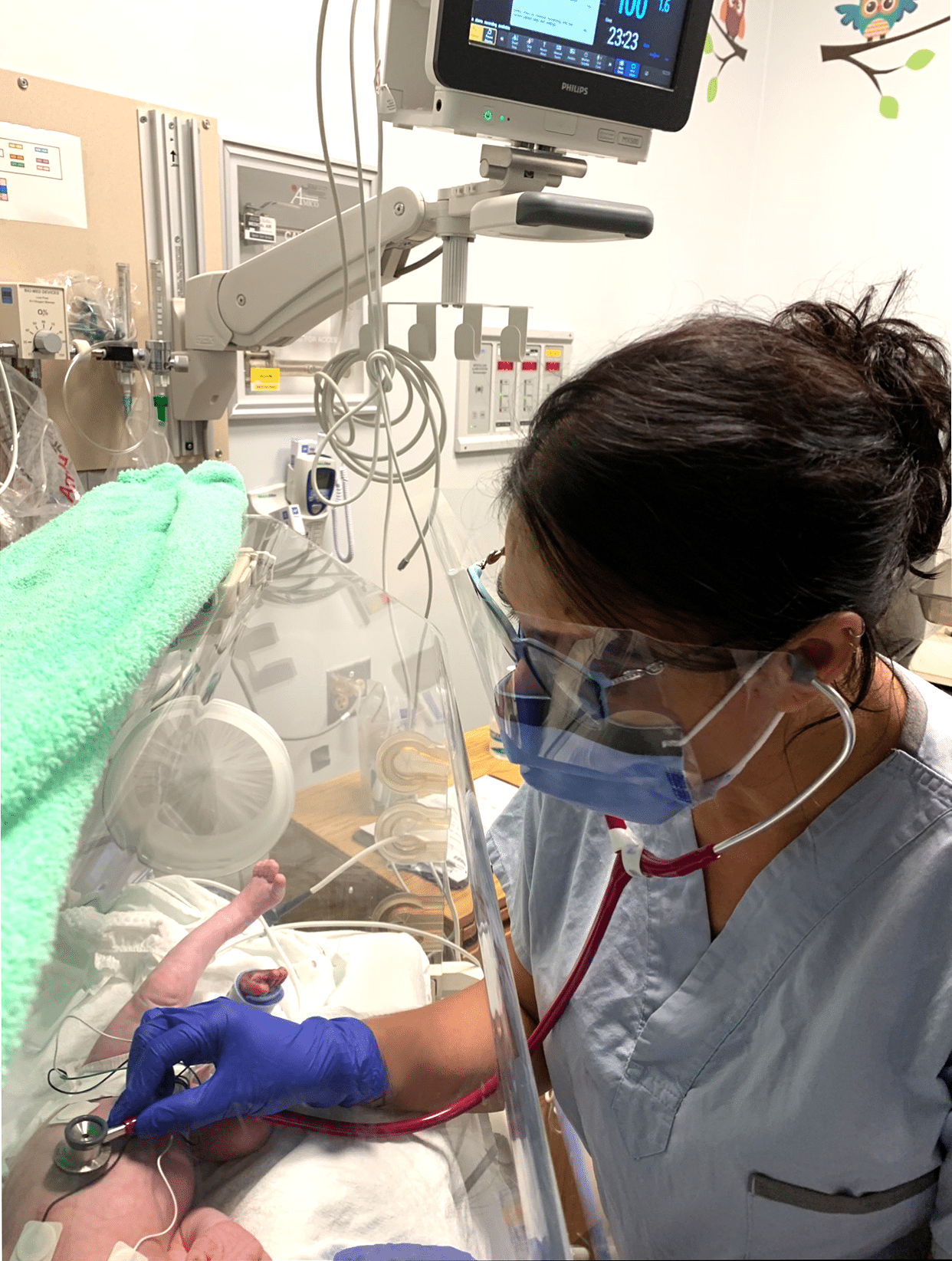
Neonatal nurses specialize in caring for newborns who require extra support transitioning into the world. This includes infants who are critically ill, who are premature or who are born with congenital health issues. Neonatal nurses can work in a nursery or a neonatal intensive care unit.
Neonatal nursing practice through a family-centered, trauma-informed lens and is highly collaborative. Neonatal nurses work along a multidisciplinary team of neonatologists, pediatricians, respiratory therapists, dietitians, lactations consultants, pharmacists and social workers.
Specialty-trained nephrology nurses work with clients receiving hemodialysis. Hemodialysis is a complex treatment where nurses assess individuals with end-stage renal disease prior to dialysis and manage all aspects of dialysis initiation, monitoring and disconnection. Renal nurses may work in dialysis units attached to an acute care hospital or in a community setting.
Most hemodialysis is done during the day and evening although there are some night positions available. Hemodialysis is a life-sustaining treatment where most patients attend dialysis three times per week for years; the care team gets to know patients and families in a meaningful way as they make a lasting difference in their patients’ lives.
Perinatal nursing involves providing specialized care to birthing individuals, and their families throughout the pregnancy, labour, birth and postpartum journey. Fraser Health provides perinatal services in eight (8) hospitals and one outpatient centre, from Burnaby to Chilliwack including three (3) high-volume regional referral centres including Surrey Memorial Hospital, Royal Columbian Hospital and Abbotsford Regional Hospital and Cancer Centre.
Services range from low-risk to complex and are provided by specialty-trained perinatal nurses in a variety of settings, including hospitals, outpatient clinics and in the home.
Perinatal nurses play a key role in patient education, fetal monitoring, labour support, neonatal resuscitation and breastfeeding/chestfeeding support, for which professional development opportunities are offered. They work as part of interdisciplinary teams that include maternal fetal medicine specialists, obstetricians, pediatricians, family practice providers, midwives, allied and public health to ensure provision of safe, holistic, trauma-informed care.
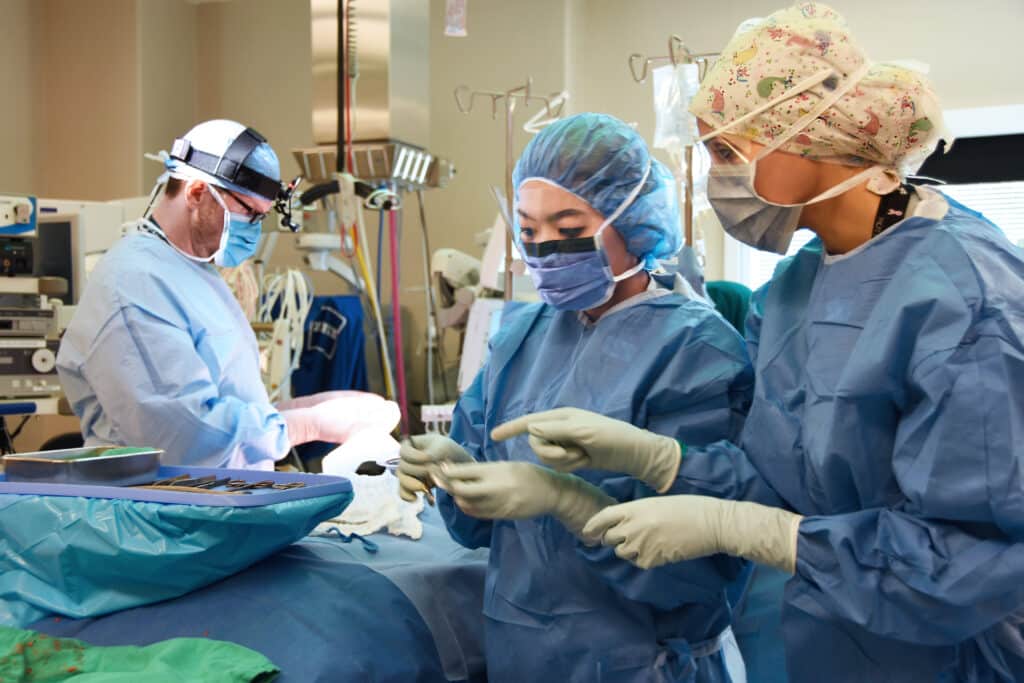
Perioperative nurses work in in the operating room in the scrub or circulating role. A scrub nurse assists the surgeon as an extension of their hands so they do not have to take their eyes off the surgical field. A circulating nurse, in collaboration with all surgical team members, manages the operating room to help maintain a safe and comfortable environment.
Fraser Health has eleven operating rooms across the region: eight community-level and three tertiary-level sites. Community hospitals treat a higher volume of healthier patients with fewer co-morbidities and often operate at a faster pace due to the high turnover of patients. Tertiary hospitals focus on intricate cases, treating patients with multiple co-morbidities, traumas and provides a 24/7 response environment for critical situations.
Fraser Health offers two streams of sponsored education programs for licensed practical nurses (LPNs) and registered nurses (RNs) wishing to pursue a career in perioperative: the in-house perioperative program and the British Columbia Institute of Technology (BCIT) perioperative program. The Fraser Health in-house and BCIT perioperative curriculums prepare nurses for entry-level practice in a perioperative setting. Graduates of both programs will be provided with site-based orientation.
Fraser Health Return of Service Agreement required: YES
Sponsorship into the Fraser Health in-house perioperative program is offered at the following sites:
- Abbotsford Regional Hospital and Cancer Centre
- Chilliwack General Hospital
- Eagle Ridge Hospital
- Jim Pattison Outpatient & Surgical Center
- Royal Columbian Hospital
- Surrey Memorial Hospital
Sponsorship into the BCIT perioperative program is offered at the following sites:
- Burnaby General Hospital
- Delta Hospital
- Langley Memorial Hospital
- Peace Arch Hospital
- Ridge Meadows Hospital
Fraser Health in-house program
Fraser Health offers sponsorship for the in-house perioperative program. Delivered in full-time blended learning format, learners will study Monday – Friday with seven and one half (7.5) hour days on-site.
Sponsorship includes:
Prerequisites
- None
Full-time studies
Offered as a compressed time-frame (CTF) over 15-17 weeks (depending on site).
Elements of blended learning include:
- Modularized theory: Association of perioperative Registered Nurses (AORN) Periop 101 & final exam
- Hands-on practice & skills labs
- Clinical experience may occur at any in-house program site in a preceptor-led model.
Graduates will receive a certificate of completion from the Association of Perioperative Registered Nurses (AORN).
BCIT
Fraser Health provides sponsorship for BCIT’s 28 week Perioperative Program.
Sponsorship includes:
Prerequisites
Offered online over twelve (12) weeks.
- NSPO 7100 – perioperative nursing theory 1
Full-time studies
Offered over sixteen (16) weeks.
- NSPO 7250 / 7251 – Scrub nursing theory 2
- NSPO 7350 – Scrub nursing clinical 1
- NSPO 7450 / 7451 – Circulating nursing theory 3
- NSPO 7550 / 7540 – Circulating nursing clinical 2
- NSPO 7750 – Consolidation of Scrub & Circulating Nursing clinical 3
The clinical component occurs at the sponsoring site through an instructor-supported preceptorship.
Graduates will receive a certificate of completion from AORN and a perioperative certificate from BCIT.
View the BCIT course details.
Frequently Asked Questions
You are eligible for sponsorship if you meet the following criteria:
- Current CPR certification
- Recent acute care experience (1 – 2 years)
- 8 to 17 weeks education commitment (depending on program)
- References from your current employment
- No previous sponsorship within the last 2 years
- Commitment to Fraser Health employment for a minimum of 18 months
For sponsorship questions, contact sne@fraserhealth.ca.
Ready to make a difference?
Start your journey to becoming a specialized registered nurse.


Can't find the perfect role right now? We can help!
Join our talent community using the form below.
Have more questions?
Contact us at sne@fraserhealth.ca